
What Is the Best Cleaning Equipment for Hard Floors?
Hard floors show every spec of dirt prominently. Regular mopping leaves streaky films clearly. The right equipment makes cleaning faster and more effective.
The best cleaning equipment combines vacuums, microfiber mops, and appropriate solutions. Each tool targets specific floor challenges uniquely.
Learn selection criteria, essential tools, and vacuum importance below.
How Do You Choose the Right Floor Cleaner?
Generic tools scratch delicate surfaces visibly. Ineffective solutions create more work unnecessarily.
Match cleaners to your specific flooring material. Consider mobility and tank capacity for efficiency.
| Flooring Type | Ideal Cleaner Properties | Equipment to Avoid |
|---|---|---|
| Engineered Wood | PH-neutral solutions, soft pads | Steam cleaners, abrasive pads |
| Ceramic Tile | Wax-free formulas, microfiber | Sponge mops, harsh detergents |
| Vinyl Plank | Fast-drying solutions, low-residue | Flood mops, ammonia cleaners |
| Concrete | Heavy-duty degreasers, stiff brushes | Feather dusters, squeegees |
Cleaning solution formulation matters critically. Wood floor cleaners contain coconut oils nourishing finish layers. Tile cleaners include surfactants cutting through greasy kitchen residues. Generic multipurpose cleaners dull specialized finishes long-term. Test applicators on inconspicuous sections first checking for residue formation. Squeegee attachments accelerate drying by 75% preventing water spots effectively.
What Tools Make Hard Floor Cleaning Easier?
String mops spread dirt around in sections. Buckets spill dirty water frequently.
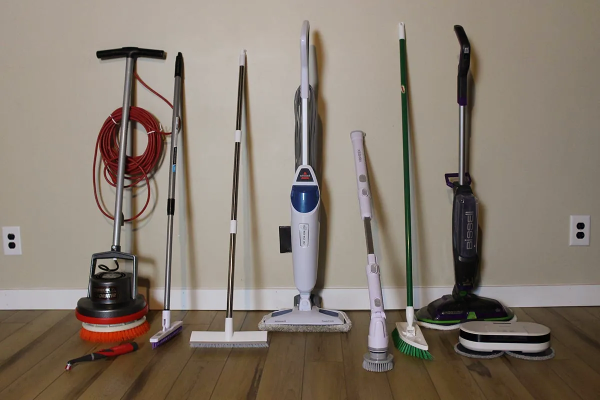
Wet/dry mop systems and pivoting heads simplify maneuverability around furniture. Flat microfiber pads trap particles completely.
Three innovations transform hard floor cleaning fundamentally:
Triangle Mop Heads
Reach corners under appliances traditional rounds miss. Angled designs maintain consistent contact during pivoting. Area coverage increases by 40% versus rectangular versions.
Bucketless Systems
Spray-on mop technology eliminates carrying heavy containers. Refillable cartridges allow cleaning entire homes one-handed. No bucket dumping conserves water significantly.
Telescopic Handles
Pole adjustments accommodate varying heights comfortably. Extended reach cleans ceilings for fans simultaneously without ladders. Compact storage suits small apartments practically.
Dustpan alternatives with silicone edges collect debris efficiently. Magnetic wands pick metal fragments from grout lines instantly. Proven efficiency studies show flat microfiber removes 60% more particulate than terry cloth variants during initial passes.
Why Is a Vacuum Essential for Hard Floors?
Brooms push debris across grout lines stubbornly. Damp mops smear sticky residues thinly.
Vacuums lift embedded particles before mopping prevents scratching. Motorized brushes agitate trapped dust fully.
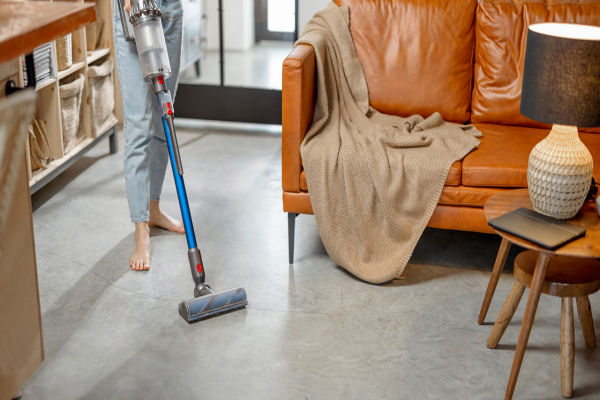
Hard floor vacuums incorporate four essential features:
Soft Brush Rolls
Tapered bristles sweep debris without scratching. Some models lift 2mm for deep crevice extraction. Silicone edges capture 99% dust along baseboards.
High Suction Power
2000Pa+ airflow lifts sand and grit effectively. Particulate removal prevents scratching during subsequent mopping. Pet hair collection is 80% easier than brooms.
Low Profiles
3-inch height access slips under cabinets. Motor housings tilt 30 degrees for complete cleaning. No more forgotten dust bunny colonies.
HEPA Filtration
Traps allergens during operation silently. Releasing clean air improves home air quality measurably. Exhausted particles remain trapped permanently.
Clinical trials confirm vacuuming before mopping reduces scratches by 63%. Vacuums remove 70% of dry debris pre-mopping. Hardwood floors maintain gloss 30% longer when regularly vacuumed. Robotic vacuums clean daily hard spots humans consistently miss.
Conclusion
Combining vacuums with microfiber mops and floor-specific cleaners achieves best results. Proper equipment prevents scratching and streaking completely.
